Garage Floor Coatings
What goes on after the prep is done right.
Every long-lasting floor coating starts here. Grinding, crack repair, and moisture testing are the unglamorous steps that decide whether your epoxy floor lasts twenty years or peels in one. Here is what proper prep involves and why it is the most important part of the job.
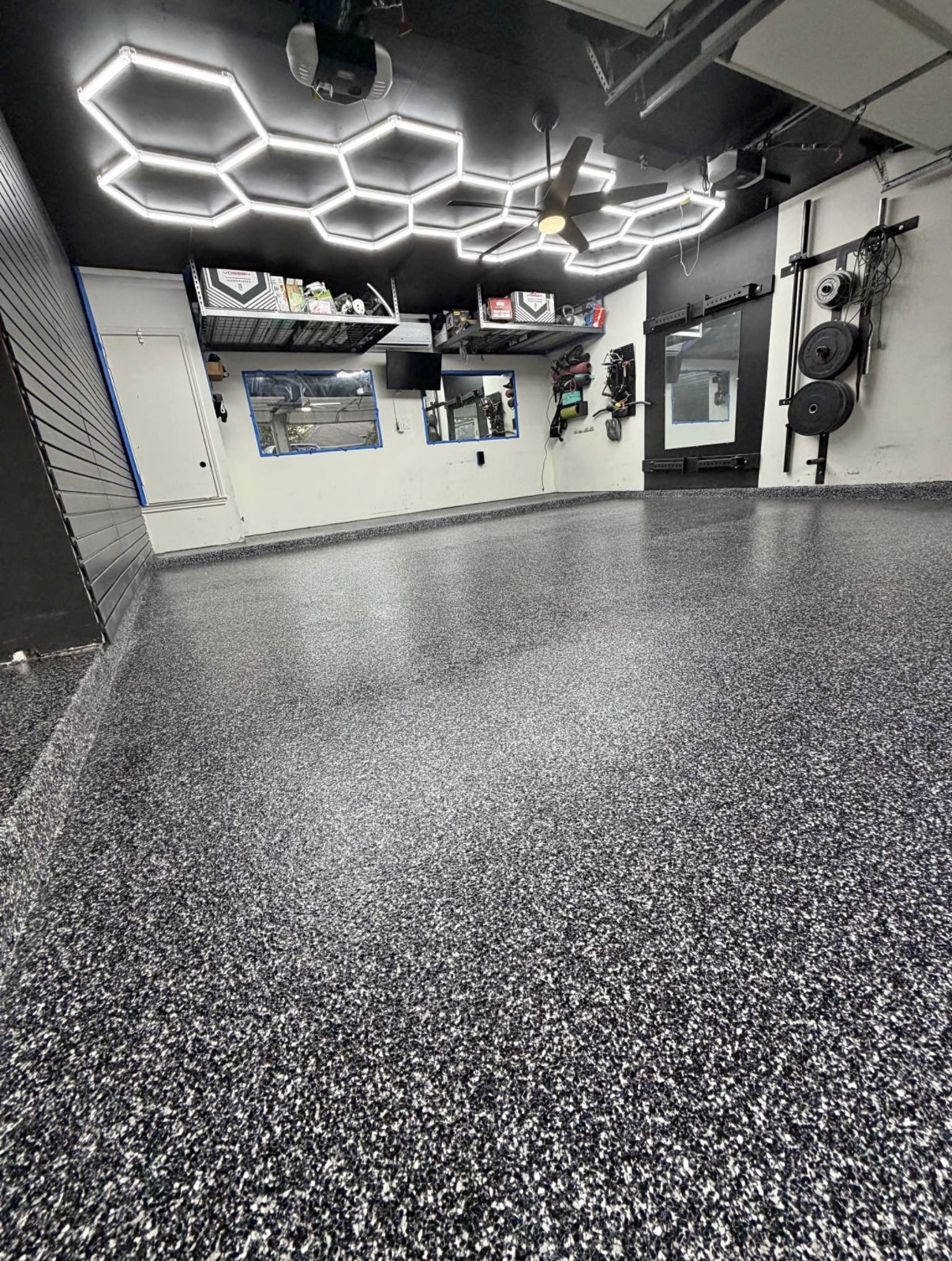
Homeowners shop coatings by color and price, but installers know the truth: a coating is only as good as the concrete it bonds to. The vast majority of failed epoxy floors — the ones that bubble, flake, or peel within a year — failed because of prep that was skipped or rushed, not because of the coating itself. Proper preparation is what you are really paying for, and it is what separates a $500 DIY kit that fails from a professional floor that lasts. If a quote seems cheap, the prep is usually what got cut.
Concrete on grade wicks moisture up from the soil, and that vapor pressure can push a coating right off the slab from underneath — a common, expensive failure. A quality installer runs a calcium chloride or relative-humidity moisture test before coating. If moisture is high, a vapor-barrier primer or moisture-mitigation coating goes down first. Skipping this step is a gamble that often ends in a peeled floor a season later. Ask any installer how they test for and handle slab moisture — the answer tells you whether they do it right.
A coating is only as good as the slab it bonds to. Grinding or shot-blasting, crack repair, degreasing, and moisture testing are what keep a coating from peeling. Skipped prep is the top cause of failure.
A test that measures vapor moving up through the slab. If it is high, a moisture-mitigation primer is applied first so the coating does not lift.
Both create the profile a coating needs. Grinding is common for garages; shot-blasting is faster for large commercial floors. The method fits the floor.
Yes — cracks, pits, and spalls are repaired and leveled as part of prep so they do not show through the finished floor.
Visit the full FAQ page for more.
What goes on after the prep is done right.
The durable topcoat that seals a prepped floor.
Where joint repair and moisture mitigation matter most.
You can also review flake systems, metallic epoxy, and the areas we serve.